when choosing overseas computer rooms, many companies pursue both speed and cost-effectiveness. this article makes a comprehensive evaluation of the los angeles cn2 computer room and gives practical cross-border access acceleration suggestions to help you find the "best" network quality and "cheapest" cost balance. generally speaking, the los angeles computer room based on the cn2 backbone can usually achieve lower latency and more stable packet loss rate on the line to china, and is the first choice for pursuing performance; however, if the budget is sensitive, there are also lower-cost alternatives through line optimization + cdn hybrid deployment.
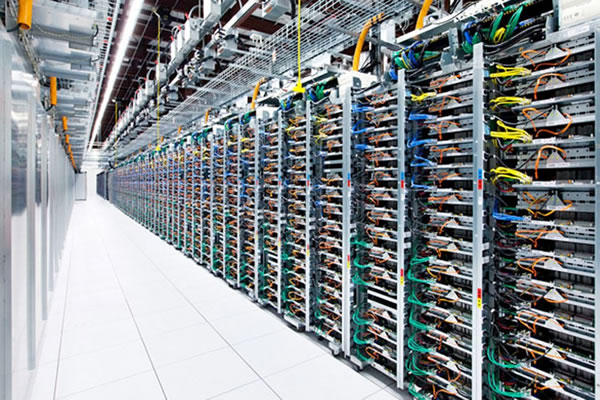
cn2 (chinanet next carrying network) is famous for its international access strategy optimized for china. the computer room located in los angeles is usually connected to multiple sino-us transit links, and is configured with dedicated bgp peering, international bandwidth tolerance, and backup lines on the egress side. this makes the route from los angeles to mainland china more direct and has fewer hops, thereby reducing the risk of delay and packet loss. for businesses that require stable access to domestic users or services, the los angeles cn2 computer room has obvious advantages in routing selection and link quality.
in the actual evaluation, tools such as ping, traceroute, and iperf3 were used to test different regions in china from the los angeles cn2 computer room. it was usually observed that the one-way delay to china was in the range of 80-110ms (depending on the destination), and the packet loss rate was less than 0.5%. the bandwidth test can stably provide more than 90% of the committed bandwidth under the direct bgp link. compared with ordinary international public lines, cn2 has significantly lower delay jitter and packet loss during peak periods, making it suitable for real-time applications (voice, video conferencing) and high-frequency access scenarios.
as the main internet exchange hub on the west coast of north america, los angeles has abundant submarine optical cable landing points and multiple large cloud and cdn service provider locations. the computer room deployed in los angeles not only facilitates access to submarine cable resources in the asia-pacific direction, but also facilitates connection with global cloud vendors and content distribution nodes, thereby achieving better availability and scalability in the overall architecture.
to achieve efficient cross-border access acceleration , recommended practical combinations include: 1) use cn2 or bgp multi-line direct connections to optimize basic routing; 2) deploy international cdn + intelligent dns to reduce the first packet time; 3) enable tcp optimization (such as bbr, adjustment window) and tls session reuse at the server level; 4) use intelligent routing or load balancing for key services to dynamically direct traffic to the exit with the lowest delay. the above combination can significantly improve user perception speed under the premise of controllable costs.
when deploying in the los angeles cn2 computer room, attention should be paid to: selecting bandwidth billing and port specifications (shared bandwidth vs. exclusive port), properly configuring firewall and ddos protection strategies; optimizing server network stack parameters (net.core.rmem_max, tcp_congestion_control, etc.); using monitoring and alarming (pingdom, zabbix, prometheus) to continuously track delay, packet loss, and bandwidth utilization. conduct route tracing regularly and negotiate with bandwidth providers for link optimization or switching in a timely manner.
for teams with limited budgets, pursuing the "cheapest" solution can consider using shared bandwidth or using cloud hosting + cdn to replace independent racks and dedicated bandwidth; however, this usually sacrifices certain stability and extreme performance. if the business is sensitive to delays (games, live broadcasts, real-time communications), it is recommended to give priority to the exclusive or bgp dedicated line of the los angeles cn2 computer room to reduce experience problems caused by long-tail jitter. the most cost-effective approach is usually to use the cn2 exclusive channel for core business and distribute static content through cdn cache.
common problems include packet loss during peak periods, route degradation, and slow dns resolution. countermeasures: maintain sla communication with the cn2 bandwidth provider, and enable backup lines or multi-line bgp when necessary; use smart dns and anycast cdn to reduce resolution delays; use retry strategies and idempotent designs for important requests to deal with short-term packet loss. through these measures, the uncertainty of cross-border access can be minimized.
it is recommended to establish a standardized testing process: 1) regularly conduct ping/traceroute and iperf tests from the los angeles computer room to multiple domestic nodes; 2) collect and visualize delay distribution, packet loss rate and bandwidth utilization; 3) conduct stress tests to evaluate peak capabilities; 4) compare the performance of different lines, different cdns and different operators to form a data-based scheduling strategy. continuous monitoring is the basis for optimizing the experience.
comprehensive evaluation shows that the los angeles cn2 computer room provides excellent latency and stability performance in cross-border access scenarios to china, and is suitable for businesses with higher performance requirements. if you are pursuing the "best" effect, you should choose dedicated bandwidth and combine cdn and tcp optimization; if the budget is tight, you can use a cloud + cdn hybrid solution to achieve the "cheapest" and acceptable performance. the final selection should be based on business type, budget and target user location, and should be combined with continuous monitoring and route optimization strategies.
- Latest articles
- Countermeasures And Alternatives When Japan’s Native Ip Login Entrance Changes Frequently
- Load Balancing Design And Practice Of Vietnam Vps Cn2 In Multi-site Deployment
- The E-commerce Platform Adapts To The Optimization And Cache Configuration Of Taiwan Cloud Virtual Host Server
- Comparison Of Vpn And Accelerator. The Actual Test Tells You How To Play On The Vietnam Server. Which Solution Is More Stable?
- Security Protection Remote Locking And Data Protection Measures When Korean Native Ip Card Is Lost Or Stolen
- Instructions On The Implementation Steps Of Performance Testing And Security Verification After Customizing The Us High-defense Server
- The Practical Value Of South Korea’s Unlimited Content Cloud Server In Terms Of Overseas Communication Efficiency In The Media Distribution Scenario
- How Does The 255 Ip Korean Website Server Combine With Cdn To Improve The Page Loading Experience?
- From The Perspective Of Maintenance And Operation, Which Singapore Cloud Server Is The Best, Including Monitoring And Alarm Design
- Xiaomi 4 Japan Serverless Problems Encountered By Overseas Users Returning To China And Their Solutions
- Popular tags
-
Analysis Of Transmission Speed From Us Cn2 To Other Servers
analyze the transmission speed from us cn2 to other servers, discuss influencing factors and optimization suggestions. -

Analysis And Recommendation Of Monthly Fee For Us Cn2 Servers
this article analyzes the monthly fees of us cn2 servers in detail and recommends cn2 servers suitable for different needs. -

How To Improve The Network Experience Of Us Servers Through Cn2 Lines
this article discusses how to improve the network experience of us servers through cn2 lines, and recommends the services of dexun telecommunications.